If you're starting off with home security, a good place to begin is with a security camera.
CCTV. NVR. DVR. WIFI. With so many acronyms and a bevy of different devices, the world of home security cameras can be a lot, especially if you’re not familiar with home security in general. Well, we’re here to help. Over the years, we’ve tested out and reviewed dozens of security cameras, from wired to wireless, from indoor to outdoor and everything in between. Here, we’re going over the different types of cameras, whether you need one or not, how to install them, and more. If it’s security camera-related, we’ve got you covered. Nvr Video Recorder
Home security cameras are devices that monitor and protect your home. You can purchase indoor and outdoor security cameras. And they often include HD resolution and other features like two-way talk, night vision, and smartphone controls.
The first question you may ask yourself is simple: is a security camera necessary in the first place? And the answer depends on the level of security you want to add to your home or business. While sensors can detect motion, letting you know if doors or windows have been opened or closed, without cameras, you can’t actually see what’s going on at home.
Expert Tip: Our Security Score checker is a good place to start when determining whether you need security cameras or not. This tool will provide you with a security score based on a number of factors, and once your score is up, it will give you tips on how to improve it. From there, you can decide if security cameras are necessary for you.
Cameras can also get you help faster; in terms of audio verification versus video verification, the police department in Fremont, California found that audio verification alone had a 95 percent chance of being a false alarm; Salt Lake City found false alarm rates of 82 percent, while the police in Burien, Washington found rates of 92 percent.1 In sum? Audio isn’t enough on its own; for the police to really see what’s going on, a camera is necessary. In contrast, cities that use video-verified responses found that the number of alarm calls they got decreased by about 90 percent overall, improving their response times so people could get help faster.
Camera footage can also be useful in a criminal investigation if you do end up being burgled. Michael Worgul, a criminal defense attorney based in Pittsburgh, Pennsylvania, said that “Surveillance camera footage is often used as evidence in criminal cases…It is easy to see how surveillance camera footage could be relevant if it depicts a person committing a crime”.2 For these reasons, we recommend installing security cameras in addition to sensors at your home or business. Read more about whether or not security cameras deter crime.
The amount of security cameras you need depends on the size of your home as well as the amount of security you want in general. At a minimum, we recommend putting a camera in the main entrance of your home on the ground floor. Ideally, you also use outdoor security cameras on all ground floor entrances; however, this won’t apply to someone living in an apartment. For more security, you can put more security cameras on the ground level, and in any room that you use frequently or must pass through to enter or exit your home. For additional security, you can put security cameras in main hallways on second or third floors. However, we don’t recommend placing cameras in bedrooms or bathrooms because of privacy issues. In fact, putting up cameras in those places is illegal in some states. Learn more about the legality of security cameras.
Since there are many factors to consider when choosing a security camera, we created a guide to walk you through the entire process, beginning with choosing the type of camera, or cameras, that you need. Of course, you can also compare security cameras here, but we’ve provided the details of how you compare cameras below.
There are a few different ways to approach the different types of security cameras, either by location, where you put them in your home or business, by power, how they receive power, by connectivity, whether they require Wi-Fi or cellular signals, by the way they record footage, whether locally or on a cloud, or by their design.
Most people will start their search for a security camera based on the installation location. Where do you need security cameras? If you live in a house with front and back yards, you can benefit from installing one of the best outdoor cameras. Video doorbells, otherwise known as doorbell cameras, may also come in handy in monitoring your front door. The point here is that you can mix and match different security camera types to achieve optimal home security. Our list of the best doorbell cams might help you pick a suitable doorbell camera.
How will your camera get power, through a battery or from a wall outlet? This is an essential question to ask yourself before purchasing a camera, and it may come down to your personal preference, with pros and cons for each type.
Believe it or not, not everyone uses the Internet. In fact, in 2019, 10 percent of Americans don’t use the Internet, according to the Pew Research Center.3 But whether or not you have Wi-Fi in your home, you can find a security camera that’ll work.
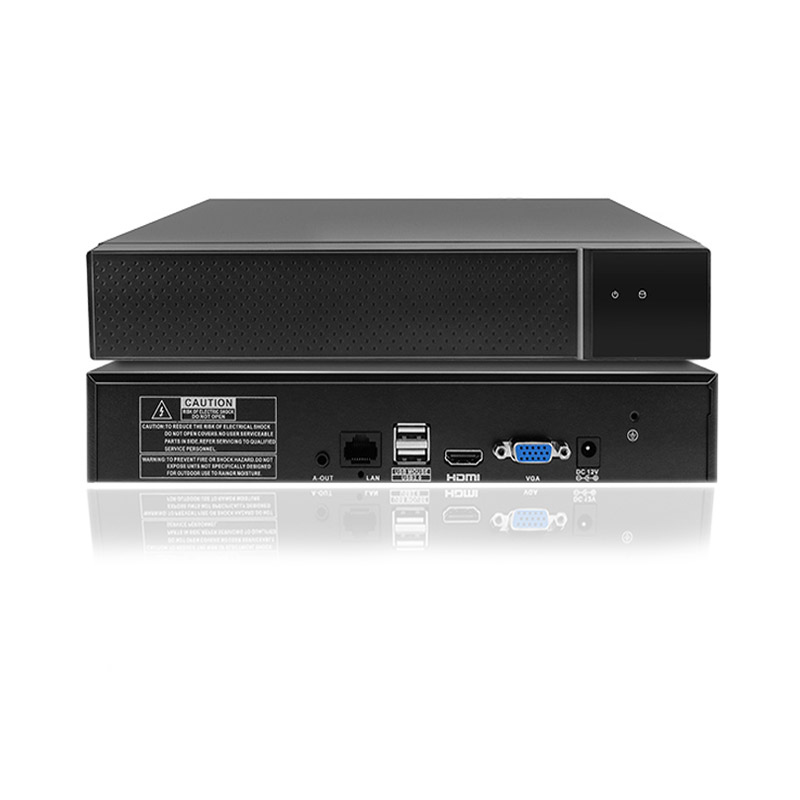
How and where do you want your cameras to record footage? DVRs and NVRs are local recording options, which means they come with a physical hard drive that stores videos. The main difference between DVRs and NVRs is purely technical. Cameras that record to a DVR send raw footage to the DVR, which is responsible for digitizing the video. These cameras are often older models. Cameras that record to an NVR digitizes the footage before sending it to the NVR, resulting in faster processing and less data traffic.
Another type of storage is cloud storage. Unlike DVRs and NVRs, cameras that record to the cloud don’t require a physical hard drive, at least not in your home. They send videos to a cloud server via the internet, which means you can access recordings anytime as long as you have an internet connection. The downside of this setup is that it relies heavily on the internet, so Wi-Fi outages can cause your cameras to delay recording.
Finally, you may want to pick a camera based on its shape, with different shapes working best in different spaces.
Once you’ve decided what type of camera you want, it’s time to delve into the camera’s features, asking yourself the following questions:
Tip: With power comes responsibility for installation. Make sure your camera either has a cord long enough to reach an outlet, if it’s plug-in, or is close enough to connect to your home’s Wi-Fi network.
Buyer Beware: Most security companies claim their outdoor cameras are either weatherproof, weather-resistant or waterproof, but these terms don’t really mean much; to truly know how a camera will fare in different weather conditions, check its IP rating and operating temperature, especially if you live where the temperature drops to below zero during winter.
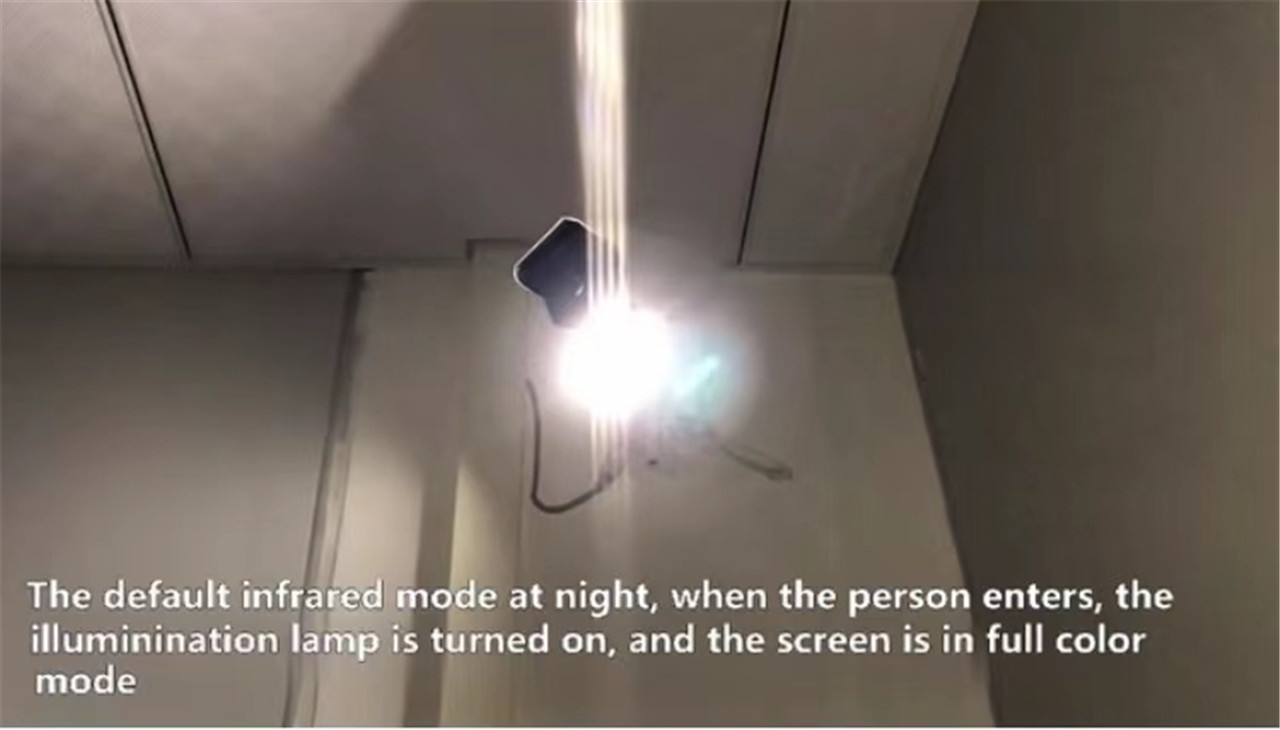
Keep In Mind: While color night vision is nice to have, bright spotlights make cameras super conspicuous, which you may or may not want; conspicuous cameras can deter thieves, but they are also more likely to be stolen.
Aside from the actual camera itself, there are a couple of other potential costs that come with security cameras, namely, monitoring and storage costs.
As you can see below, there’s a huge price range when it comes to smart security cameras, but the average camera costs around $150— $100 for an indoor camera and $200 for an outdoor camera. However, there are huge outliers like the $20 Wyze Cam or the $399 Vivint Outdoor Camera Pro, which is why it’s important to focus on the camera’s features to make sure you pay for what you get.
Finally, there’s monitoring. Most cameras let us monitor them for free through the mobile application, but some offered or even required 24/7 professional monitoring, especially if it was part of a larger security system. Take abode’s monitoring costs, for example. While we self-monitored through the app, we wanted the extra protection of having a team of people behind us 24/7 if we were busy or unable to call for help. That cost us $20 a month or $100 a year and included 30 days of cloud storage, which is often combined with monitoring subscriptions. Again, the monthly and yearly costs differ greatly, but there’s no reason to pay more than $40 a month for professional monitoring, especially given how these costs are getting lower and lower.
Take note that in most cases, the alarm company won’t be able to check in and see your livestreams, which is good news for your privacy. You wouldn’t want a random stranger sitting in a monitoring center to see you in a towel, right? However, some companies, such as SimpliSafe, offer video verification. What this means is that during emergencies, the monitoring center gets temporary access to your livestream to see what’s going on. This supposedly speeds up police response. That’s something to keep in mind.
We test each and every security camera on our website for about a year before writing and filming our review, paying attention to things like day and night vision, two-way audio, storage, smart platform integrations, and artificial intelligence. We make sure that each camera does what it says in the tech specs, from its video resolution to the quality of its speakers and microphones. We also use the app to ensure that there’s no delay or lag and that everything is easy to install and use. Of course, we see if the AI really works or not by walking by and throwing inanimate objects in front of the camera, then seeing how our notifications react. And finally, with outdoor cameras, we make them brave the elements to see how they function.
Installing security cameras can look like a lot of things. If it’s a wireless camera, installation probably either means simply plopping the camera on a flat surface or screwing it into a wall or ceiling. For outdoor cameras, make sure that your camera is installed within the zone of your Wi-Fi so it retains a connection with your app. Wired cameras are a bit more difficult to install than wireless cameras, depending on the design. Some cameras only need to be plugged into a power outlet, while hardwired cameras are connecting with your home’s electrical system. Many video doorbells will be hardwired into an existing doorbell and chime setup, which is obviously harder than setting up a battery-powered video doorbell.
For most security cameras, you’ll install them yourself, a process called DIY installation. However, some security companies offer professional installation, either in-house or by a third party installer. Note that that usually applies to cameras that are part of larger security cameras from companies like ADT and Vivint. Smaller companies like abode also offer professional installation through HelloTech. To learn more about these costs, check out our ADT pricing page, our Vivint pricing page and our abode pricing page.
For the most part, though, you’ll be able to install your camera yourself typically through a guided app setup. Typically, that looks like:
Trust us, you don’t have to be a security expert to install most DIY home security cameras; rather, they’re designed to be easy to install for anyone, so long as you’re comfortable with using apps.
There are a few different ways to see how a security camera is recording, depending on the model, make and type of the camera:
Hopefully, that cleared up any questions you had about the process of buying and testing out a security camera. If you’re ready to start the search, check out our list of the best cameras of 2023 or any of our other best camera reviews. Still got questions? Keep on scrolling…
The best outdoor security cameras are from Ring, Nest, Arlo, Blink and Lorex; we recommend the Ring Stick Up Cam Battery, the Nest Cam IQ Outdoor, the Arlo GO, the Blink Outdoor and the Lorex Super HD 4MP camera.
When buying a security camera, you should look for at least 1080p HD video, infrared night vision, two-way audio, cloud and local storage, integrations with either Alexa or Google Assistant and person detection.
Home security cameras are worth it. Many thieves will choose not to burgle a house if they notice a security camera, and if the house is burgled, homeowners can use the cameras’ footage as evidence in a criminal investigation. Cameras can also lead to quicker police responses, as they are able to verify that a crime is happening.
The best DIY home security camera systems are from Ring, Canary, Arlo and Blink.
ASU. (2020). Responses to the Problem of False Burglar Alarms. popcenter.asu.edu/content/false-burglar-alarms-2nd-edition-page-3-0
Worgul, Sarna & Ness. (2017). Use of Surveillance Cameras in Criminal Cases. pittsburghcriminalattorney.com/use-surveillance-cameras-criminal-cases/
Pew Research Center. (2019). 10% of Americans don’t use the internet. Who are they? pewresearch.org/fact-tank/2019/04/22/some-americans-dont-use-the-internet-who-are-they/
MPL. (2020). IP Ratings. mpl.ch/info/IPratings.html
EMarketer. (2019). US Voice Assistant Users 2019. emarketer.com/content/us-voice-assistant-users-2019
Youtube. (2020). Security.org Youtube Channel. youtube.com/playlist?list=PLak1LBRQaLOXKfJmFVboeh2mUT1e-fDVH
Business Securtiy Cameras What’s My Security Score?