Get quotes from vetted installers
Ready to get up to 3 quotes to compare? Power Transformer Price
The Electric Vehicle Council (EVC) is once again opposing a distributed network service provider’s tariff plans on the basis that it discourages high-power EV charging.
Back in May, the EVC took exception to Ausgrid’s 2024-2029 regulatory proposal. This time, it’s taking aim at SA’s local electricity network, SA Power Networks (SAPN).
In its submission to SAPN (PDF), the Electric Vehicle Council frets explicitly about the future of higher-power business connections:
“The draft proposal from SAPN identifies in section 6.2.3 of Part B that the status quo, whereby all business connections >120kVA attract demand or capacity charges, will remain in place.”
The council said this represents “the least supportive tariff arrangements in the country for high power public EV charging”.
If the EV Council’s analysis is correct, the different tariffs it analyses would impose these charges for a 500kVA charging location (that is, four charging bays delivering 100MWh per annum):
The EV Council’s point is that in other jurisdictions, all small business customers – not just EV chargers – can opt out of the kVA component, and that this should exist for South Australia too.
The council suggests SAPN “align with the rest of the country on a volumetric level of 160kVA, and let business customers opt out of volumetric charges below that.” The EVC noted consumers have this option if they’re above 120kVA but consuming less than 160MWh per annum; and only 446 such consumers exist.
Join thousands receiving the latest solar, battery and EV news and views from SolarQuotes!
The EV Council submission also pushed back against SAPN’s proposal to spend $15 million preparing its network to apply orchestration to home EV chargers – in other words, to give the network some control over when people use the devices.
The council said it believes this would cost more than SAPN could hope to recover from the measure, and that the network should instead concentrate on incentives rather than automation:
“The economically sensible move is to encourage well behaved charging with appropriate pricing structures, educate the consumers, and leave them in control.”
EVC also believes that SAPN should consider time-of-use tariffs not only for electricity consumption, but for feed-in tariffs as well, where, the submission said, the customer can vary the time at which they export because they have vehicle-to-grid (V2G) capability (or a stationary battery).
The Electric Vehicle Council’s submission said to encourage V2G participation, the tariff structure should “offer the high feed-in tariff to the network between 5pm and 9pm, without linking it to a significant penalty for consumption from the grid during those hours.”
Sign up for our weekly newsletter!
Richard Chirgwin is a journalist with more than 30 years' experience covering a wide range of technology topics, including electronics, telecommunications, computing and science.
You should ask them what costs to provide the service they are factoring in to develop these charges. One normal pad mount transformer is 500kva. Add the HV upgrade to feed multiple trannies by a private contractor then argue the point. You shouldn’t expect a free ride from those who can’t afford an EV.
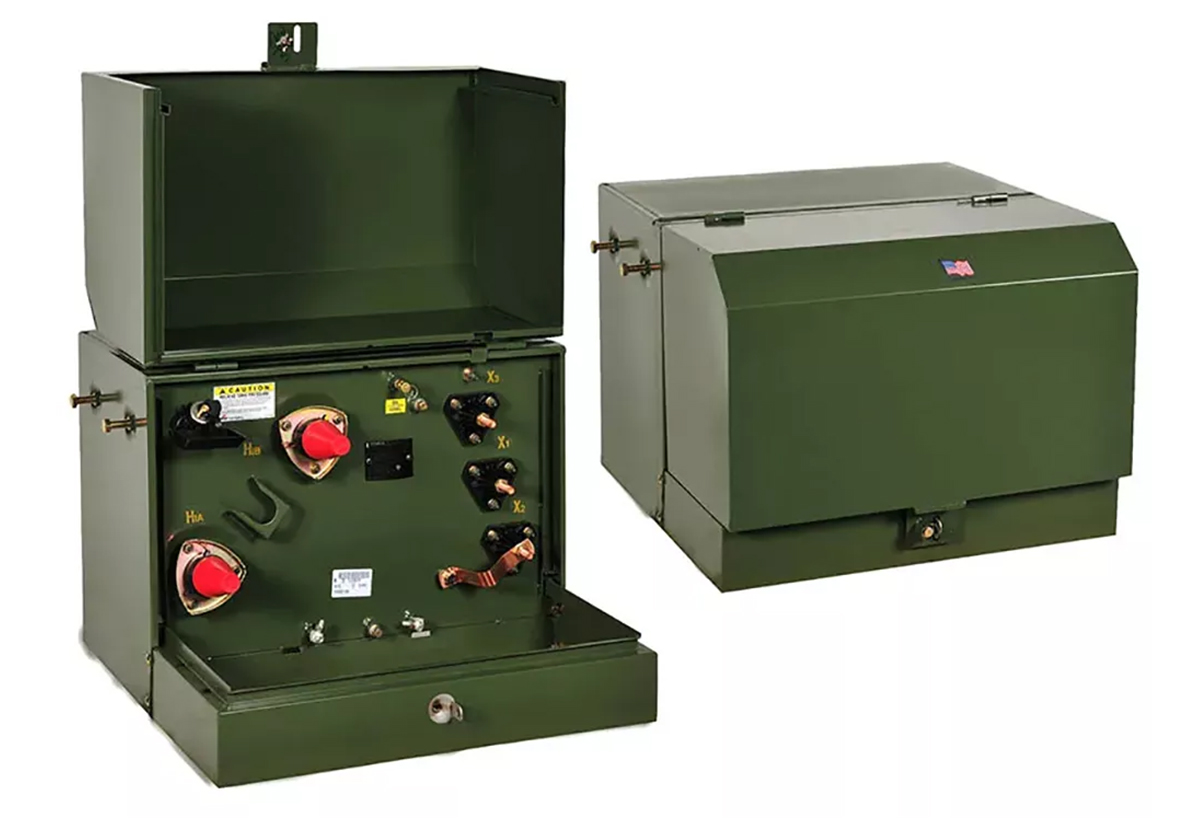
This seems like the EVC wanting a free lunch. 500kVA is a huge site. That would normally be high voltage at at least 11kV and they want to have that for small customer rates??
Isn’t this simply the EV council opposing user pays and preferring cheaper options for EV users?
Similarly, isn’t the EV Council’s opposition to SAPN basically the opposite of aircon treatment? Electricity companies want the ability to switch off home aircon, despite this being a life saving necessity for some. Recharging your car when you want is nice, but is it actually a necessity?
Perhaps I’m misreading this, but to me it looks like the EV Council don’t want to pay their fair share, but do want special privileges. Am I overlooking something, or is it simply a matter of perspective?
The way I’m reading it is they are saying to SA instead of looking at ways to penalise people for EV use look at ways EVs can help the network via V2G.
If your behaviour adds to societal cost you should pay for it. Whether that be carbond charging or high power EV charging.
I’ve fully electrified, with the singular exception of a stationary battery. I looked pretty closely at the economic, carbon and functional benefits of each element. Overall, I got a 50% reduction in costs (more in bills) and 70% reduction in carbon emissions. Net economic and carbon benefits of the stationary battery are both negative and the only functional benefit is presently power backup.
It made me very aware of the LCOS of batteries which needs to be somewhere in the range 15c-20c/kWh to deliver a worthwhile benefit. Stationary batteries like the Tesla powerwall are something like 30-35c/kWh installed.
I can’t imagine vehicle batteries are cheaper than this, so V2G is looking like an economic con-job to me: one where grid companies exploit consumer ignorance to avoid capital expenditure by parasitically under paying for the use of the consumers’. If forced to pay fair V2G costs, the grid would find it cheaper to pay for big stationary batteries and EV owners would maintain the range of their vehicles for longer.
Of course it’s not impossible that major battery breakthroughs could rebalance these economics, but bear in mind that stationary storage LCOS without the power and energy density constraints of mobile is projected to be 3-10 times cheaper than current lithium chemistries (See Ambri, Form).
The SA proposal actually makes perfect sense. The grid is sized to meet maximum load. Increasing dramatically the maximum load of the grid should come with a big cost.
Fact is we should be encouraging workplace and home based trickle charging off solar. Not routine high power charging networks.
I’m a bit confused by the article. Shouldn’t there be a cents/kWh somewhere that the vendors and motorist pay?
Please keep the SolarQuotes blog constructive and useful with these 5 rules:
1. Real names are preferred - you should be happy to put your name to your comments. 2. Put down your weapons. 3. Assume positive intention. 4. If you are in the solar industry - try to get to the truth, not the sale. 5. Please stay on topic.
Notify me of follow-up comments by email.
Notify me of new posts by email.
Read The Good Solar Guide Free Online!
Get quotes from vetted installers
© 2009 to 2023 Peacock Media Group
Ready to get solar quotes?
Get up to 3 free quotes
Download the first chapter of The Good Solar Guide, authored by SolarQuotes founder Finn Peacock, FREE! You’ll also start receiving the SolarQuotes weekly newsletter, keeping you up to date on all the latest developments on Australia’s solar scene.

Single Phase Pad Mounted Transformer We respect your privacy and you can opt out from the newsletter at any time.